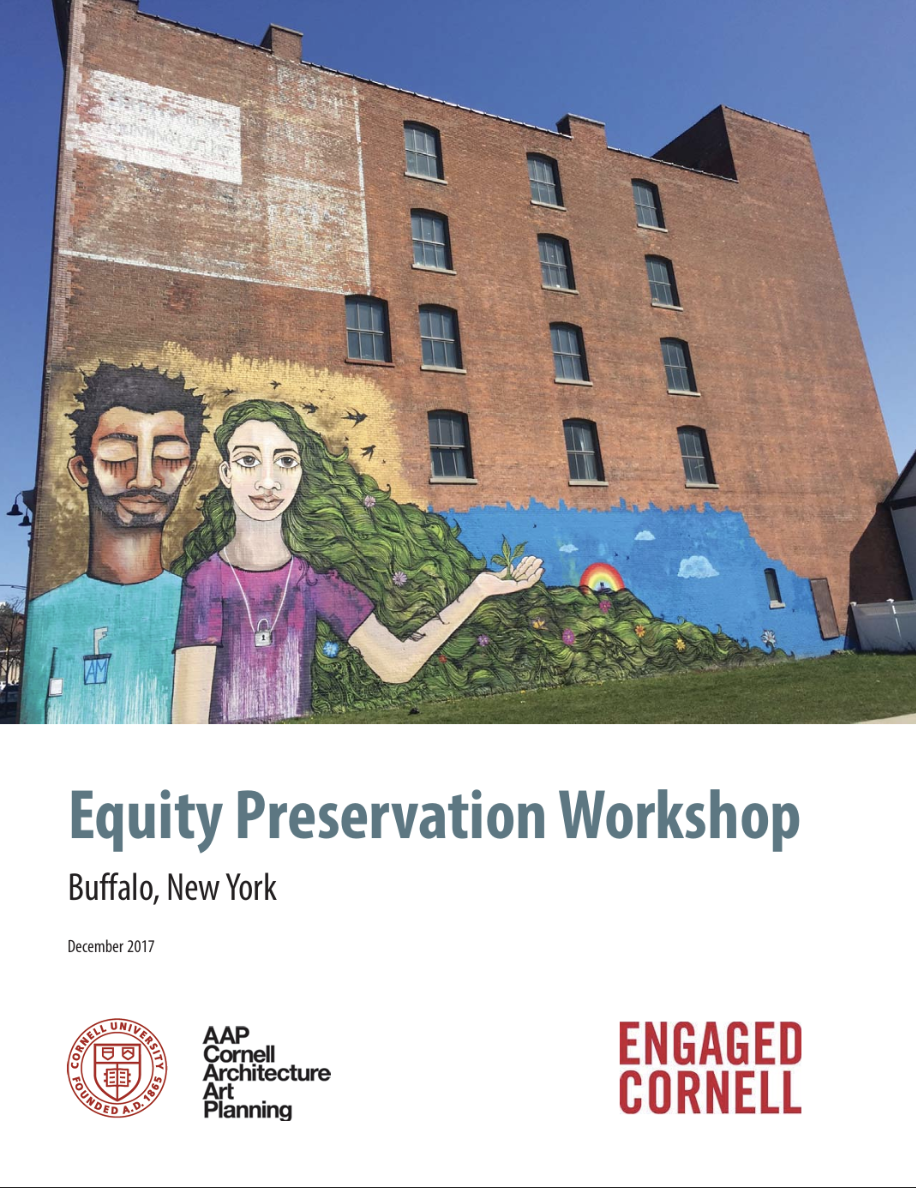
Selected Publications
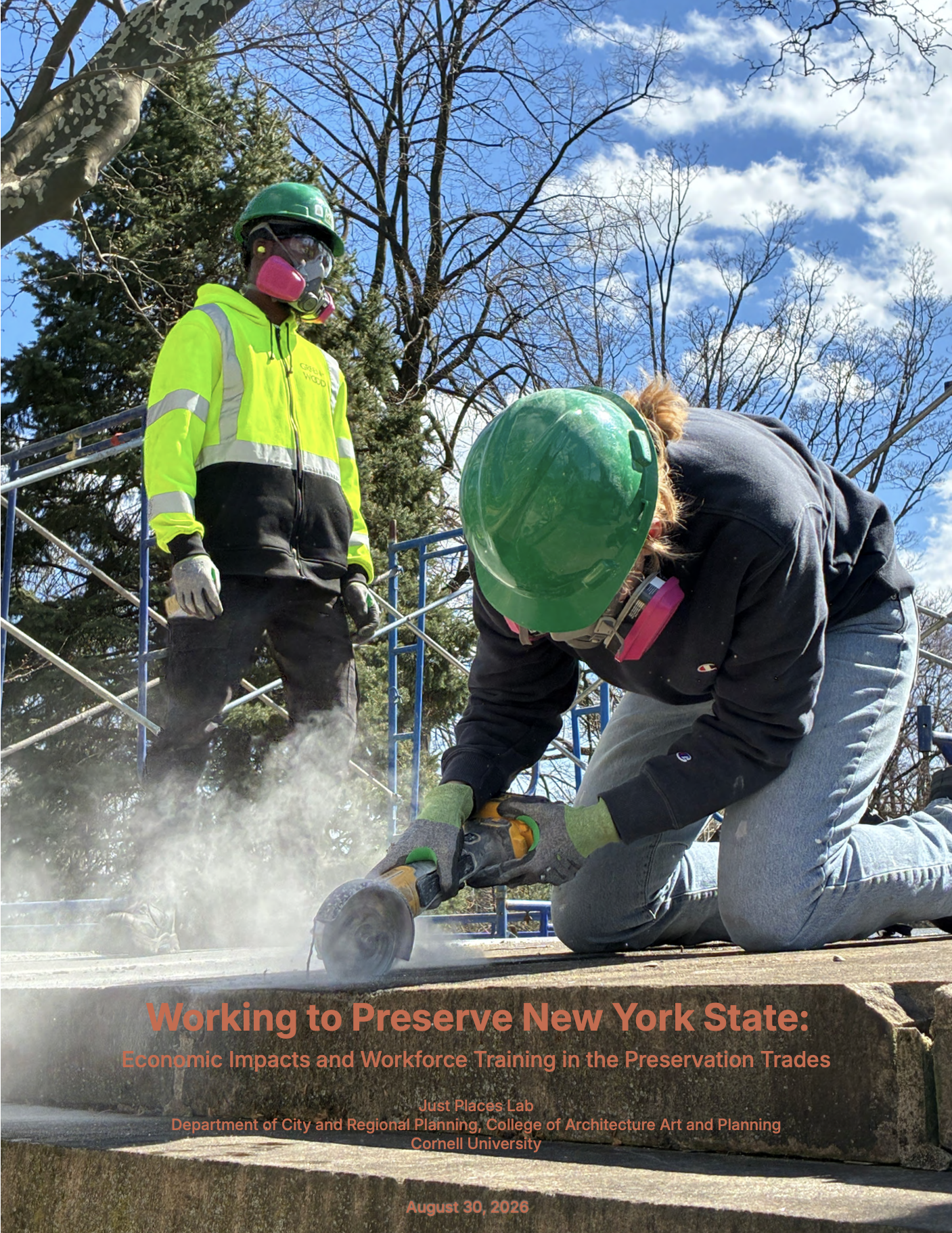
Working to Preserve New York State: Economic Impacts and Workforce Development Training in the Preservation Trades is the first comprehensive analysis of the preservation trades in New York.
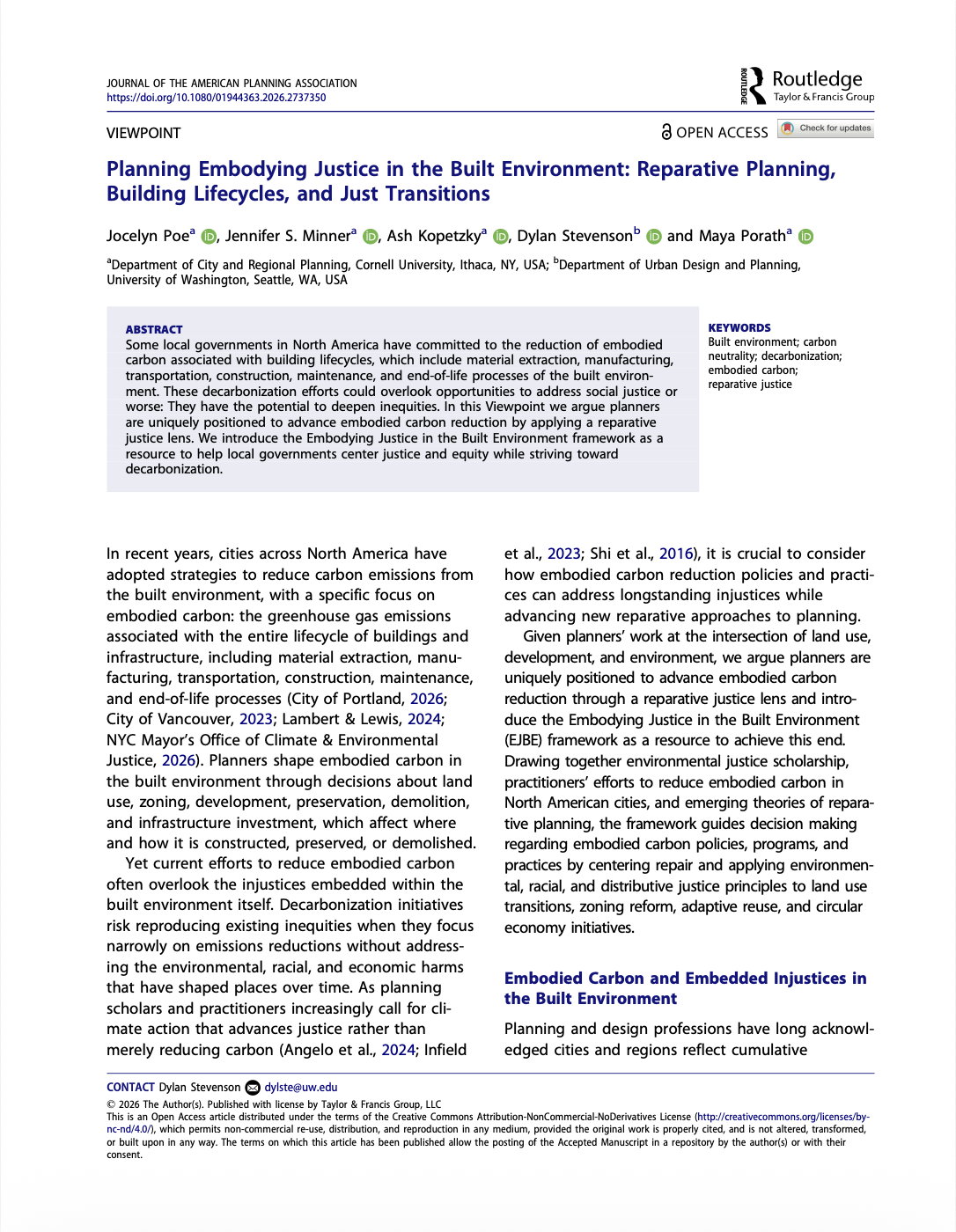
Article in the Journal of the American Planning Association about Embodying Justice in the Built Environment
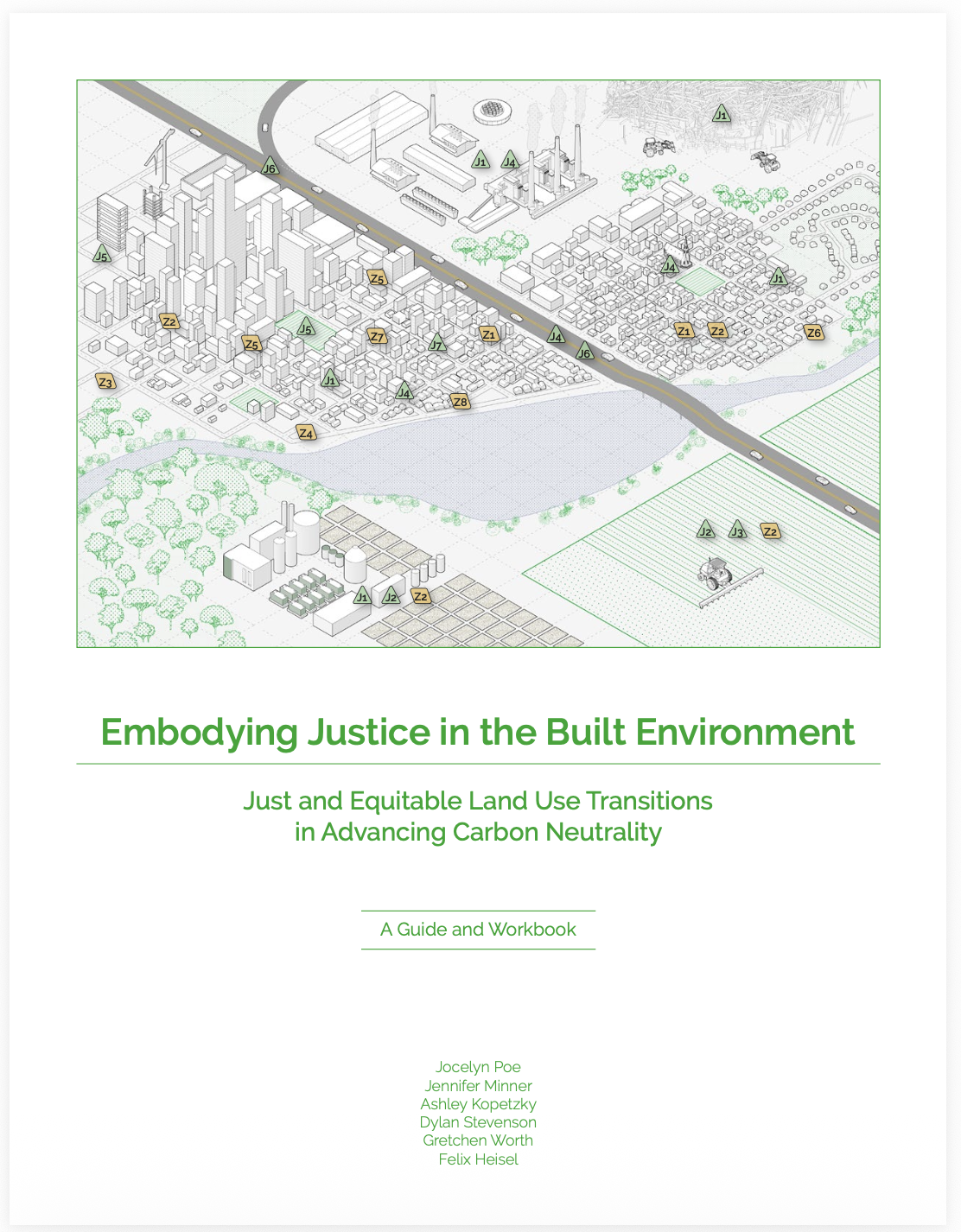
Embodying Justice in the Built Environment: Just and Equitable Land Use Transitions
Guide and Workbook
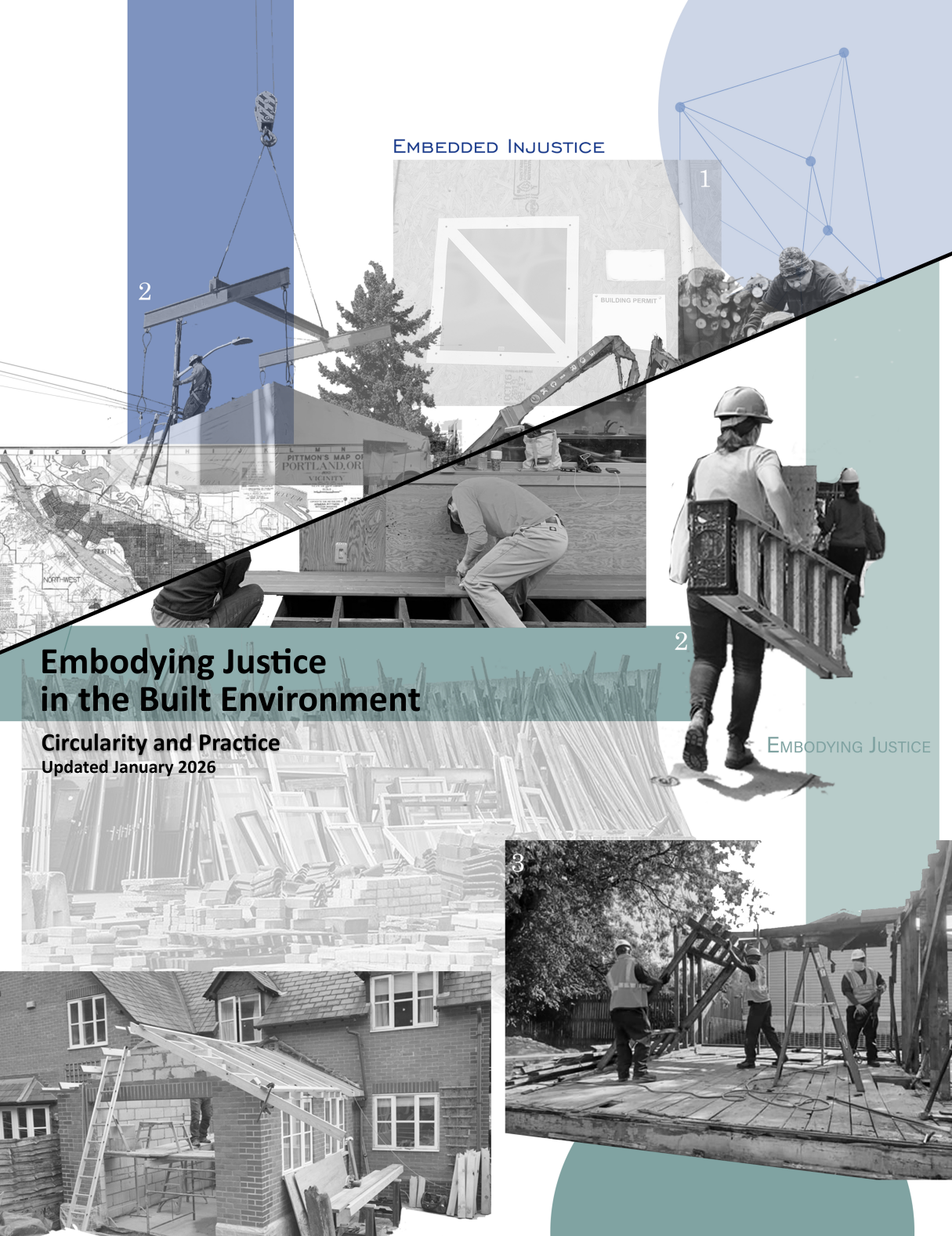
Embodying Justice in the Built Environment: Circularity in Practice
Guide and Workbook
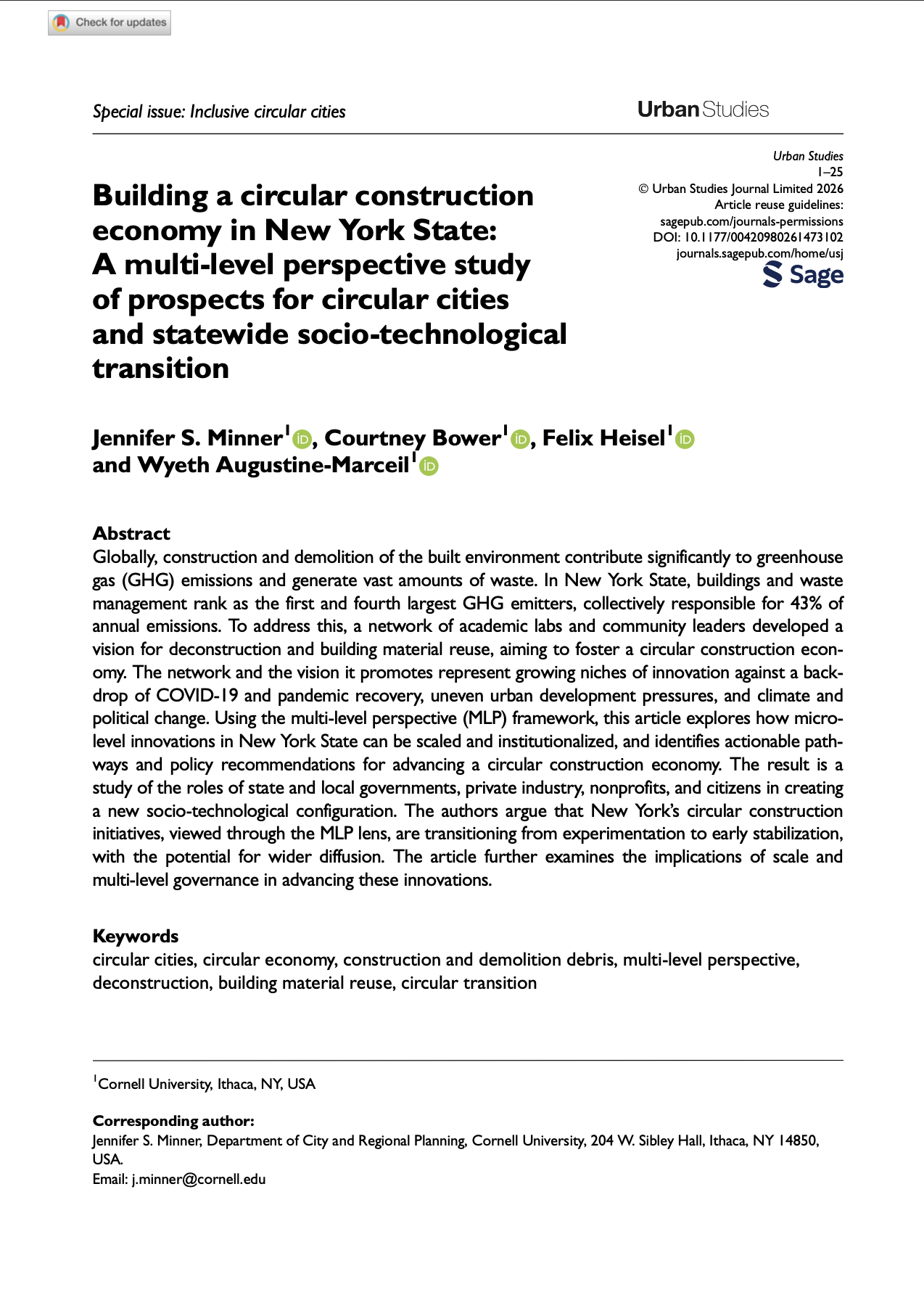
Article in the Inclusive Circular Cities special issue of the journal Urban Studies.
This book features a dialogue between Profs. Jenni Minner and Felix Heisel about Historic Preservation and Circular Construction.
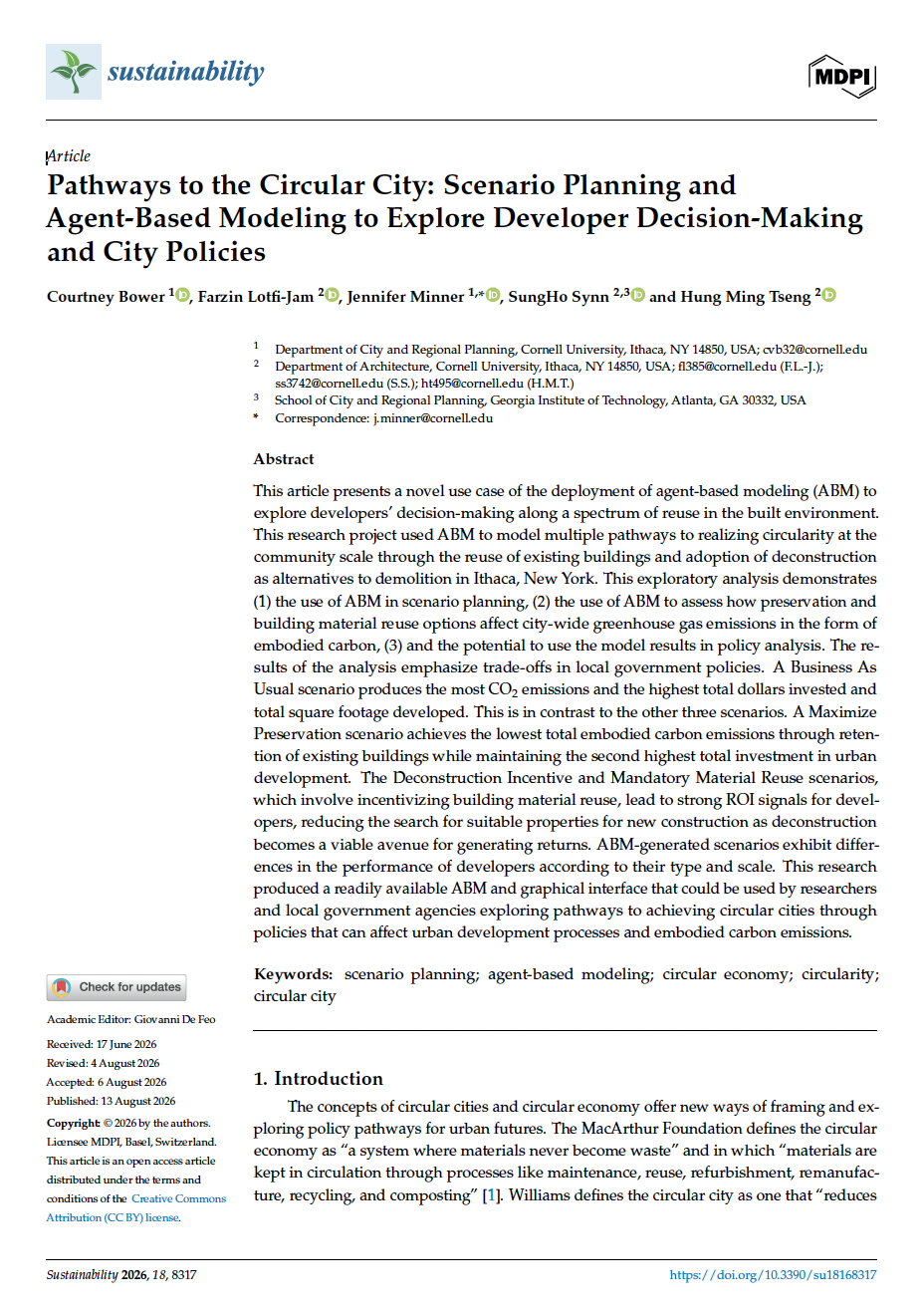
Article in the article Sustainability highlighting agent-based model building to explore outcomes of scenarios along a spectrum of reuse in the built environment.
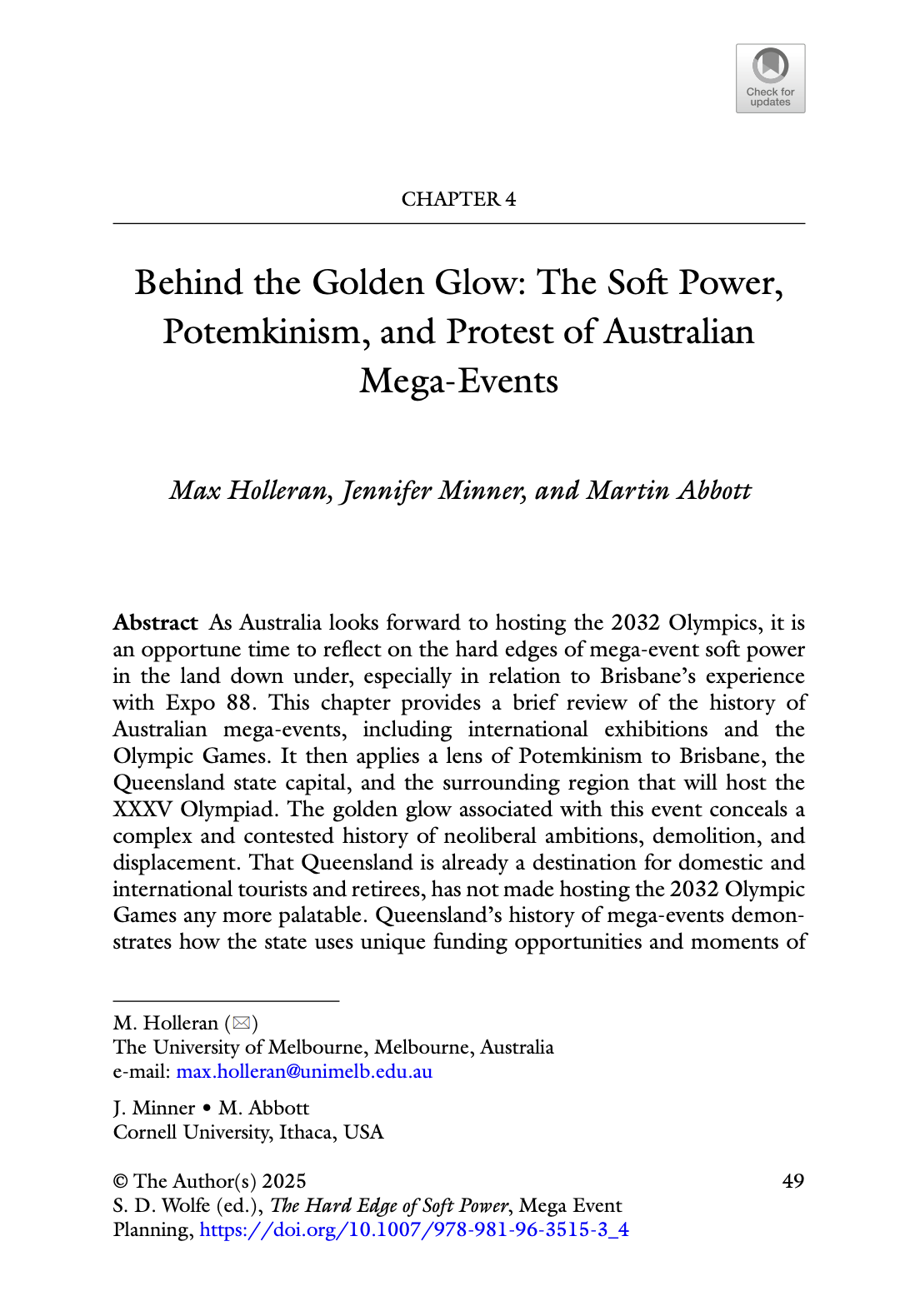
Book chapter on Australian mega-events in the book The Hard Edge of Soft Power: Mega-Events, Geopolitics, and Making Nations Great Again
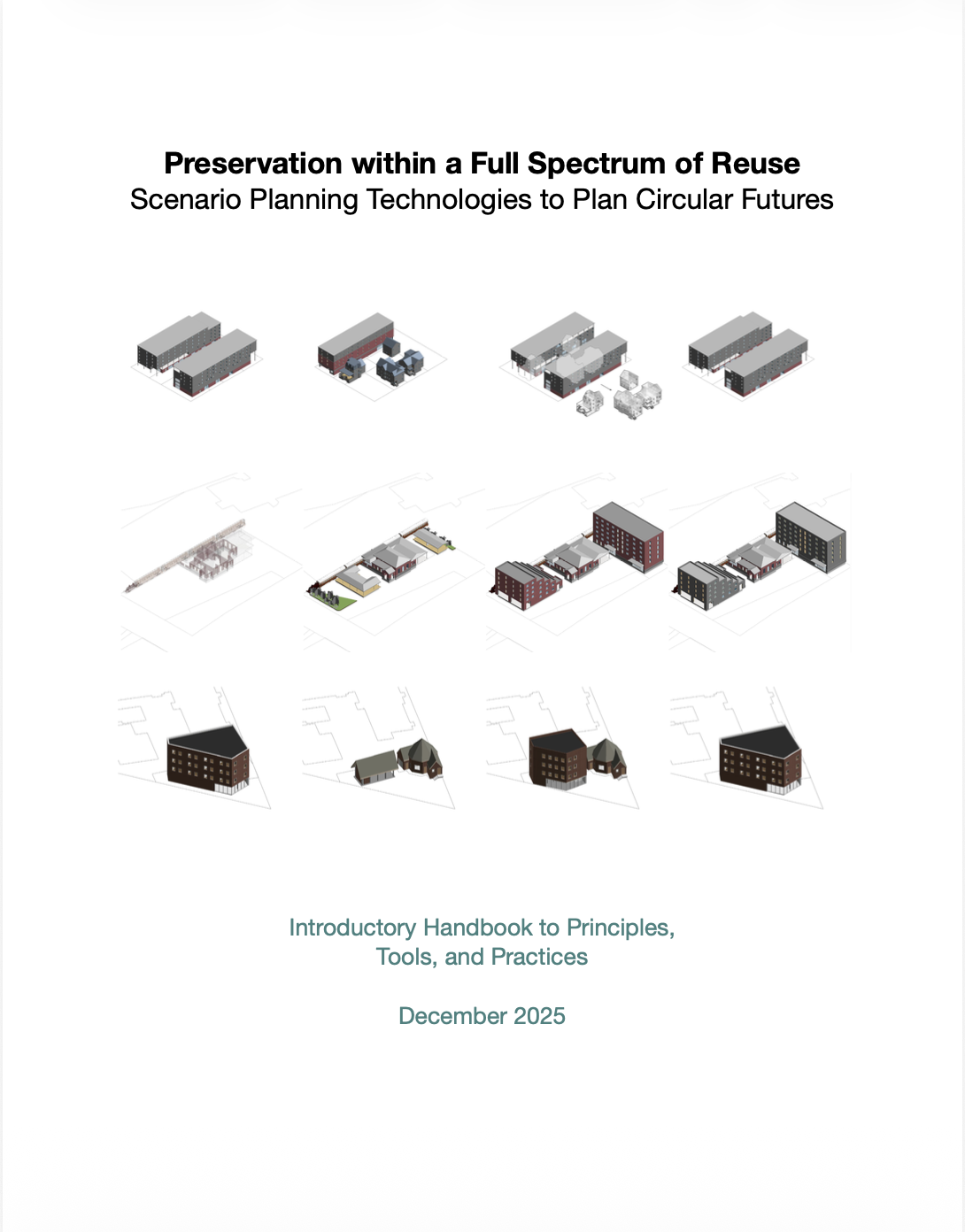
Handbook designed by the Realtime Urbanism Lab and the Just Places Lab for historic preservation professionals, planners, architects, researchers, and others interested in using emerging concepts, methods, and technologies to shape more sustainable and circular urban futures. Readers will find practical guidance on how tools such as scenario planning, agent-based modeling, life-cycle analysis, and 3D visualization can be utilized to inform decision-making at multiple scales, ranging from individual sites and historic districts to community-wide planning efforts.
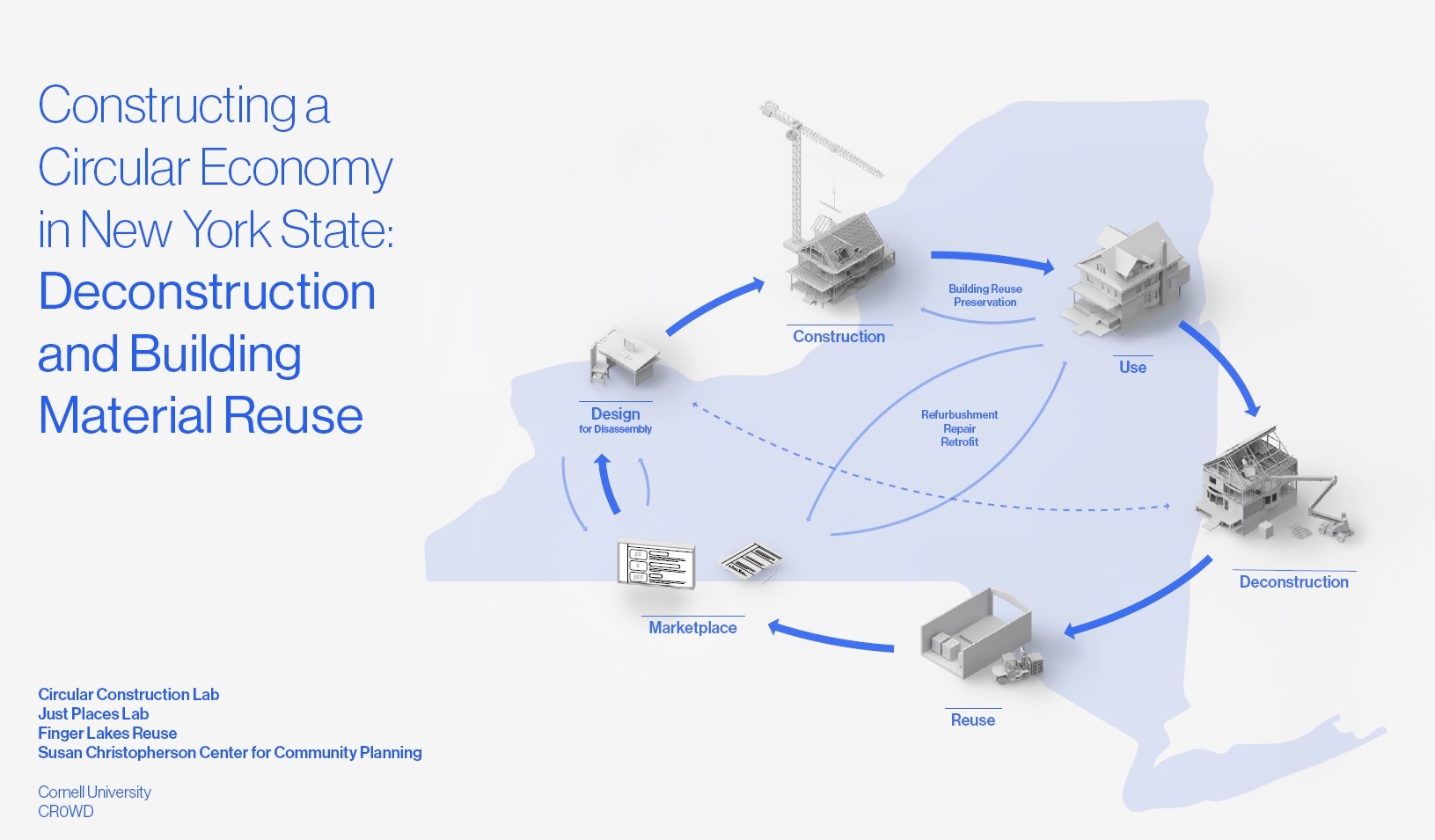
This white paper was authored by Cornell University researchers led by the Circular Construction Lab and Just Places Lab in collaboration with community organizations and industry experts within the New York State-based Circularity, Reuse, and Zero Waste Development (CR0WD) network. The white paper consists of an analysis of the current linear construction economy in New York State, an assessment of the economic, environmental, and social potential of deconstruction and reuse, and state-level policy and practice recommendations based on this assessment. The intent of this analysis is to aid policymakers, state agencies, and local governments in the development of a circular economy in New York State.
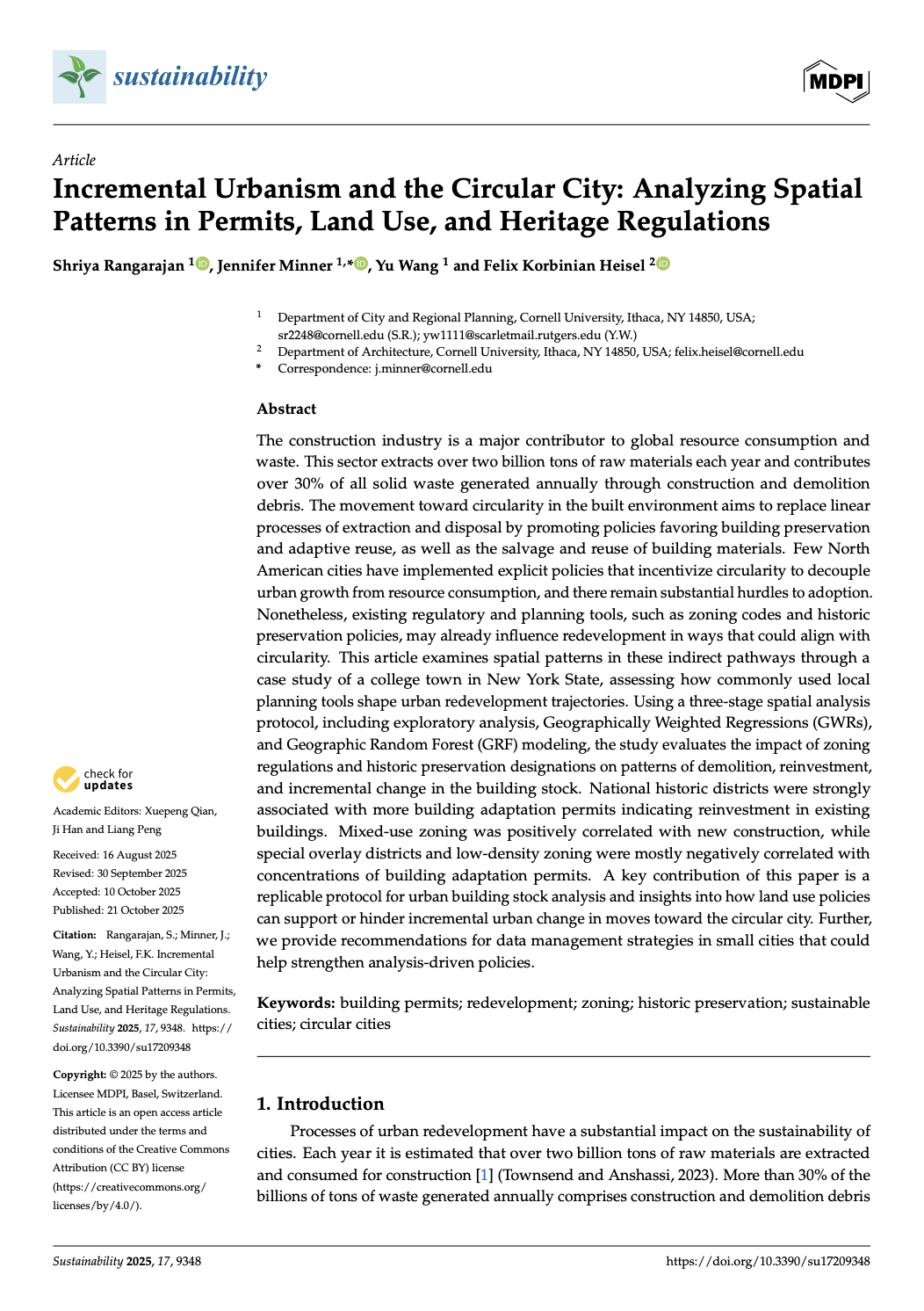
Article in Sustainability that discusses research employing a three-stage spatial analysis protocol, including exploratory analysis, Geographically Weighted Regressions (GWRs), and Geographic Random Forest (GRF) modeling. This study evaluates the impact of zoning regulations and historic preservation designations on patterns of demolition, reinvestment, and incremental change in the building stock.
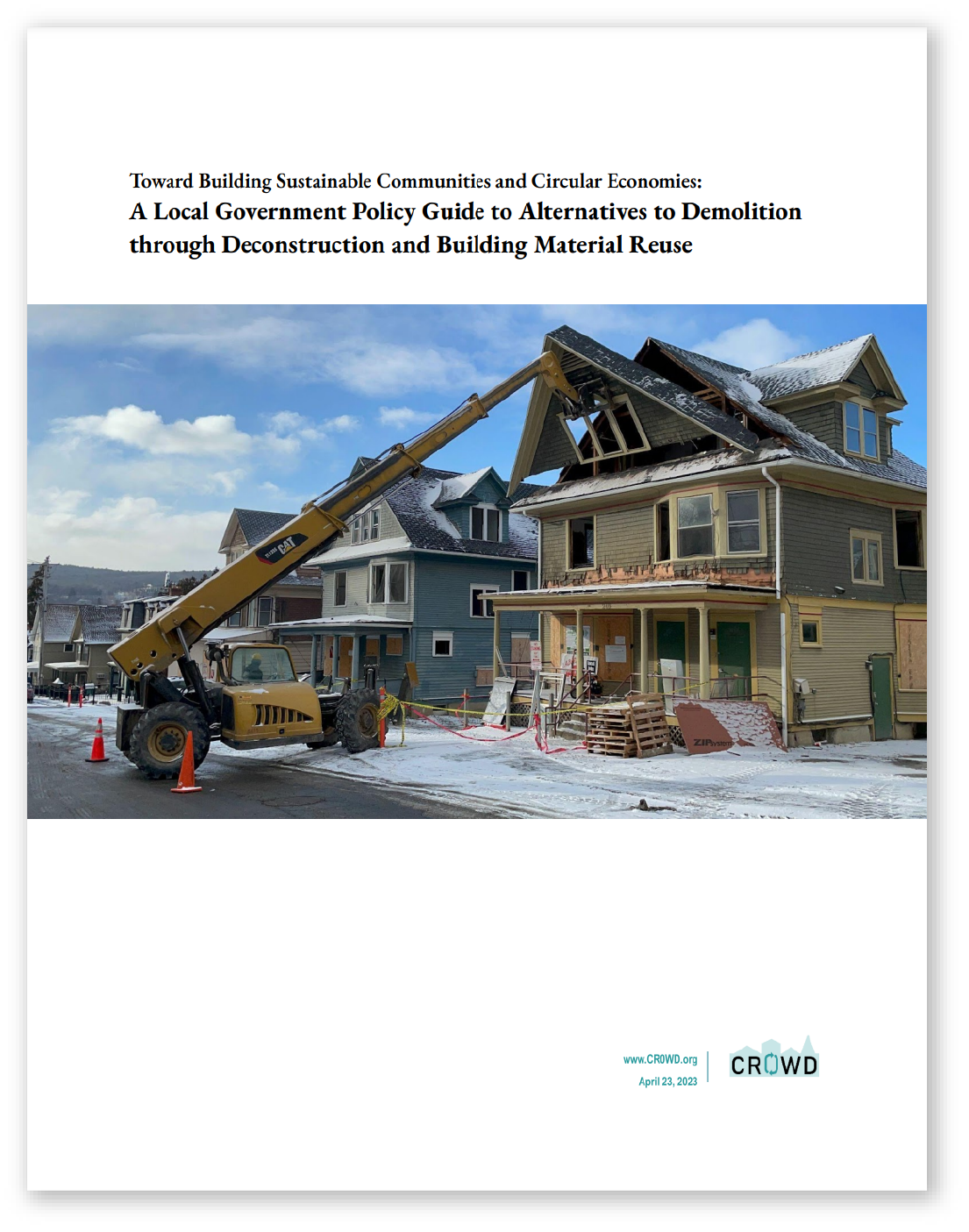
This is a guide for local governments interested in adopting policies to support building deconstruction and preservation as alternatives to demolition. The guide includes a model resolution and ordinance that can be customized to local communities.
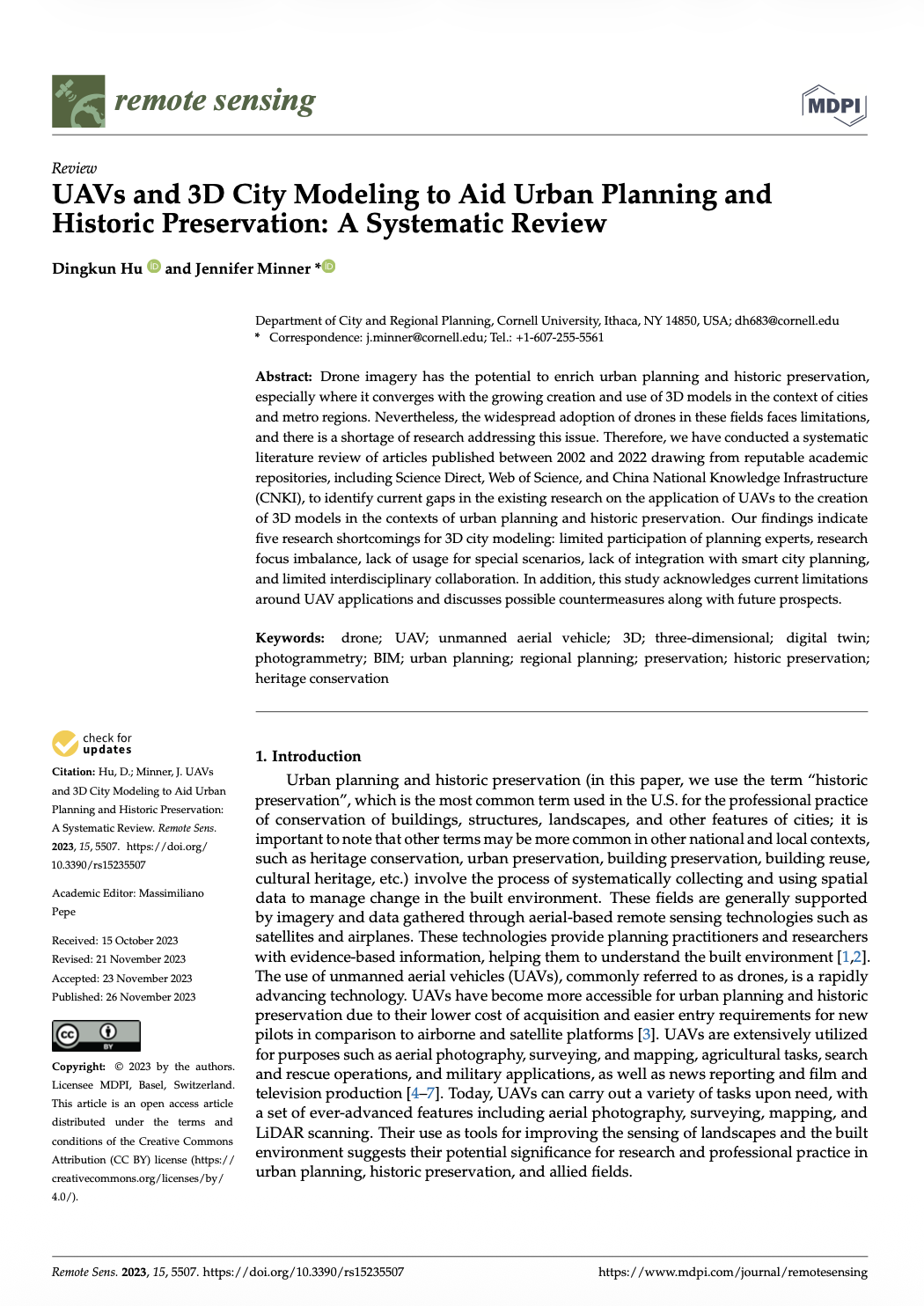
An article in the journal Remote Sensing that is a systematic literature review of articles to identify current gaps in the existing research on the application of UAVs to the creation of 3D models in the contexts of urban planning and historic preservation.
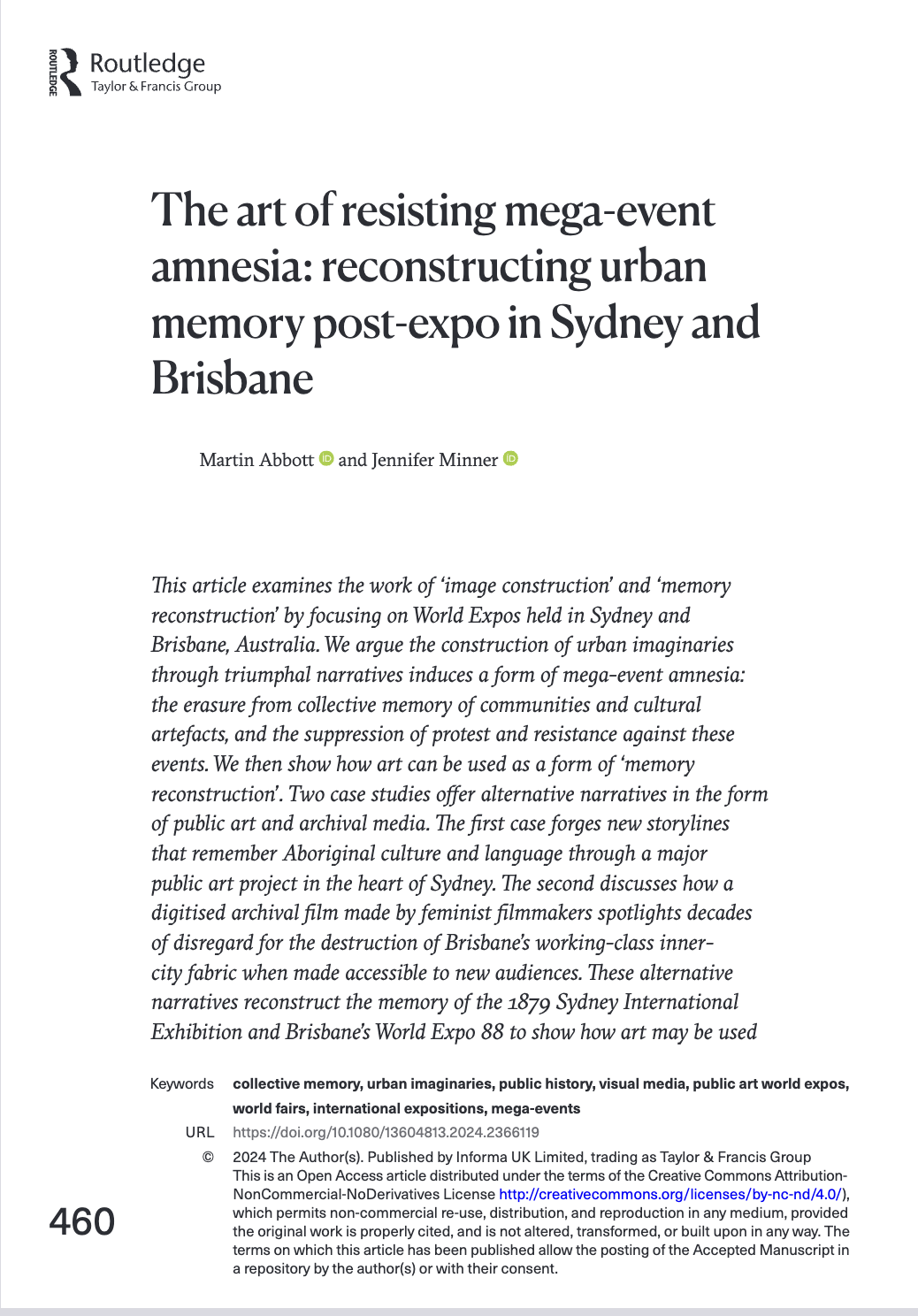
An article in the journal City: Analysis of Urban Change, Theory, Action that examines the work of ‘image construction’ and ‘memory reconstruction’ by focusing on World Expos held in Sydney and Brisbane, Australia.
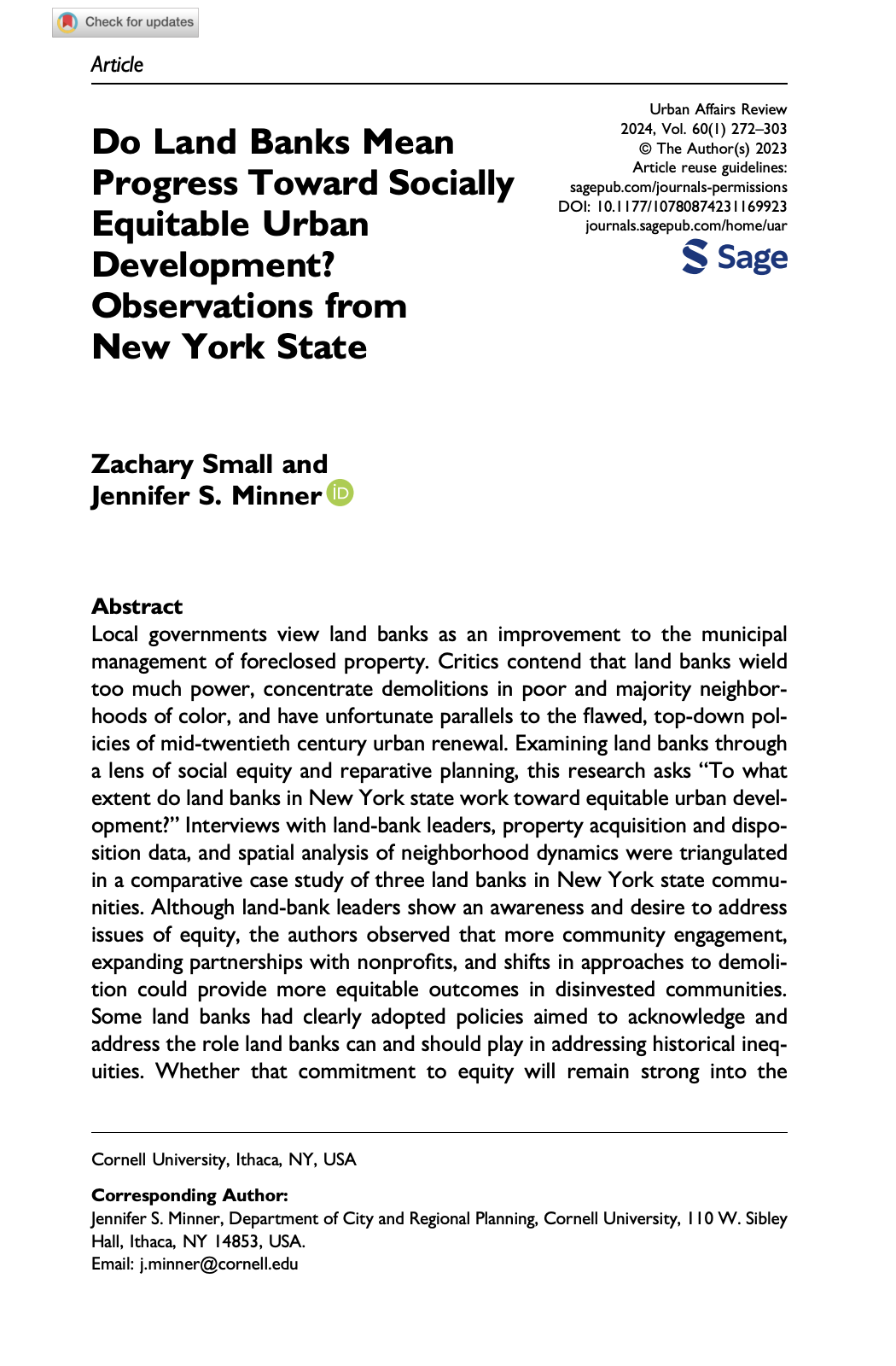
Article in the journal Land Use Policy examining land banks through a lens of social equity and reparative planning.
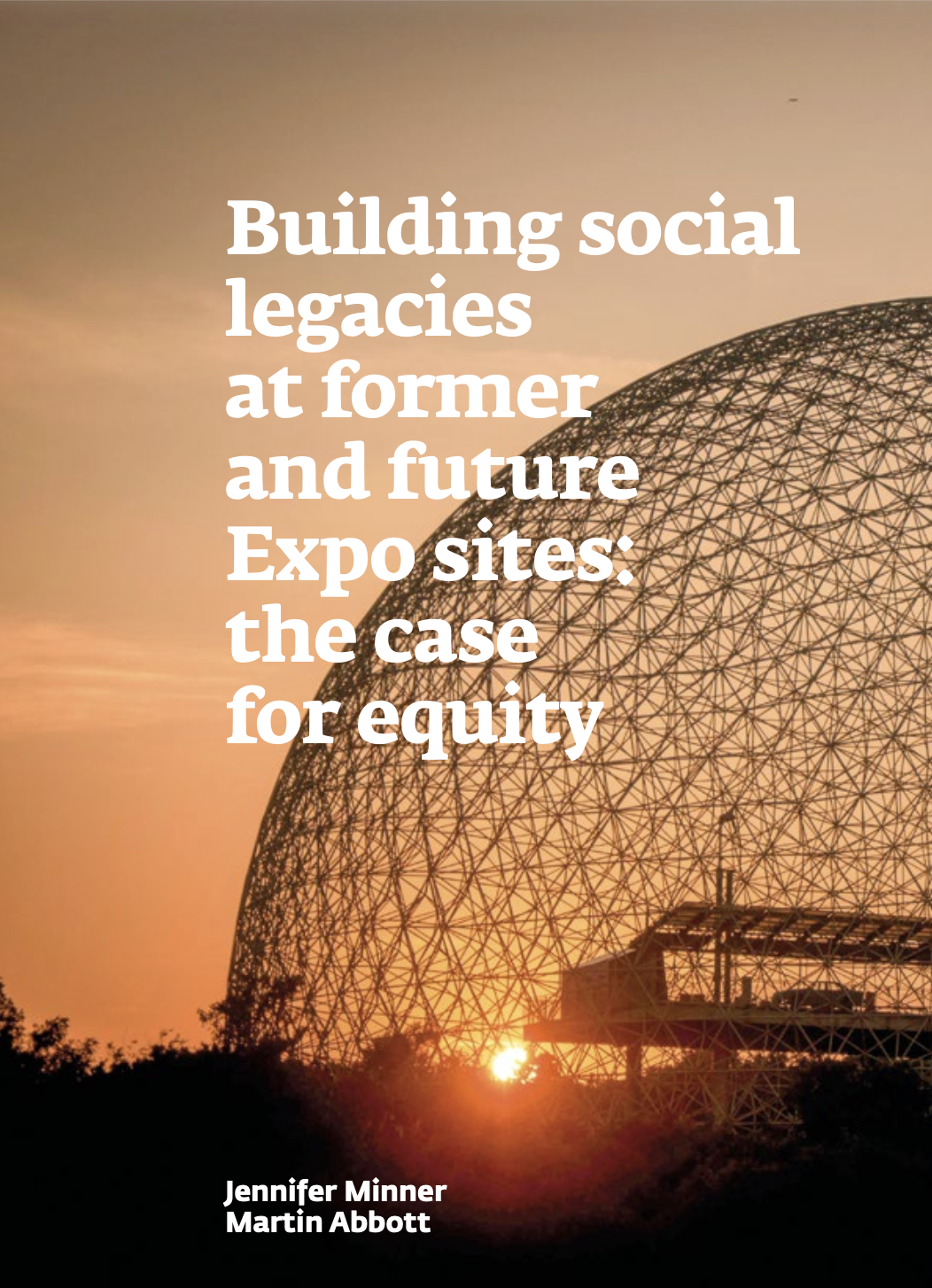
Chapter in the Bureau des International Expositions' BIE Bulletin (2023) - Expos and territories: anticipating the post-Expo transition
Article in the journal Land Use Policy, where we consider the spatial and land use aspects of expo sites, developing a post-expo typology to aid in in-depth and comparative analysis of spatial patterns across sites and years after the mega-event. We then present a framework for equitable urban development, to consider the equity dimension of sustainability at former mega-event sites. The urban development typology is then considered with the equitable urban development framework, to propose interventions that are specific to particular expo types.
Article in the journal Future Anterior: Journal of Historic Preservation History, Theory, and Criticism. This article describes three community-engaged courses in which students drew connections between concepts of equitable preservation, socially engaged art, and the just city.
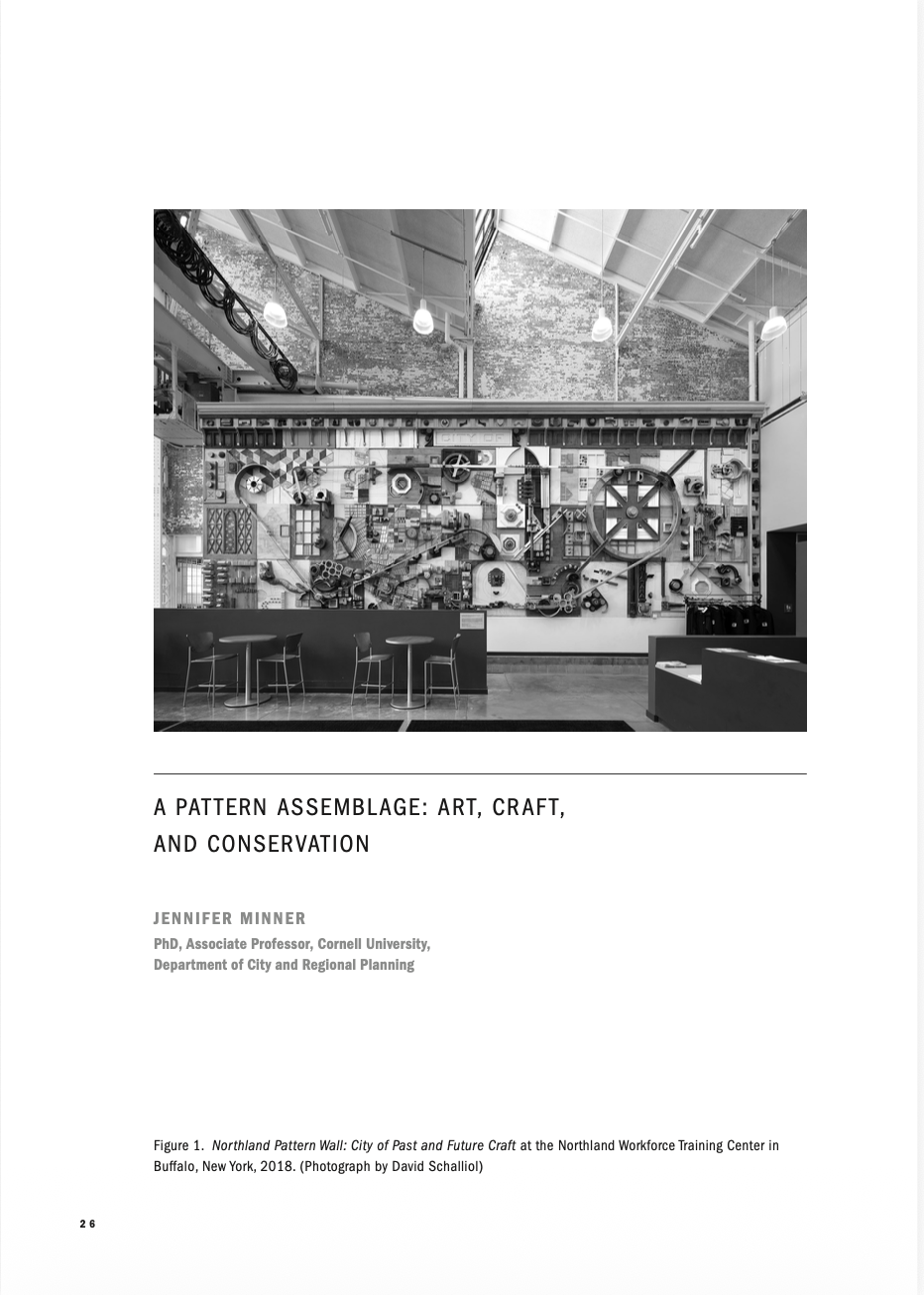
Article in the journal Change Over Time that begins with The Northland Pattern Wall: City of Past and Future Craft, an assemblage artwork created by artist and architecture professor Dennis Maher with co-instructors and students of the Society for the Advancement of Construction-Related Arts (SACRA) program. This article highlights takeaways for heritage conservation, as well as allied professions, about the relevance of building trades and creative practices that help to shape and conserve the built environment. The story behind the Northland Pattern Wall is used as an opportunity to reflect on the potential to build stronger alliances between professionals, tradespersons, and artists in designing creatively out of the patterns of the past to build a more sustainable and equitable future city.