


Embodying Justice in the Built Environment
Just and Equitable Land Use Transitions; Circularity and Waste
Embodying Justice in the Built Environment is a framework presented in a series of guides and workbooks for government agencies and community organizations seeking to center justice and equity in their work toward building carbon-neutral futures. The Carbon Neutral Cities Alliance funded this research, and its staff and member cities participated in its creation.
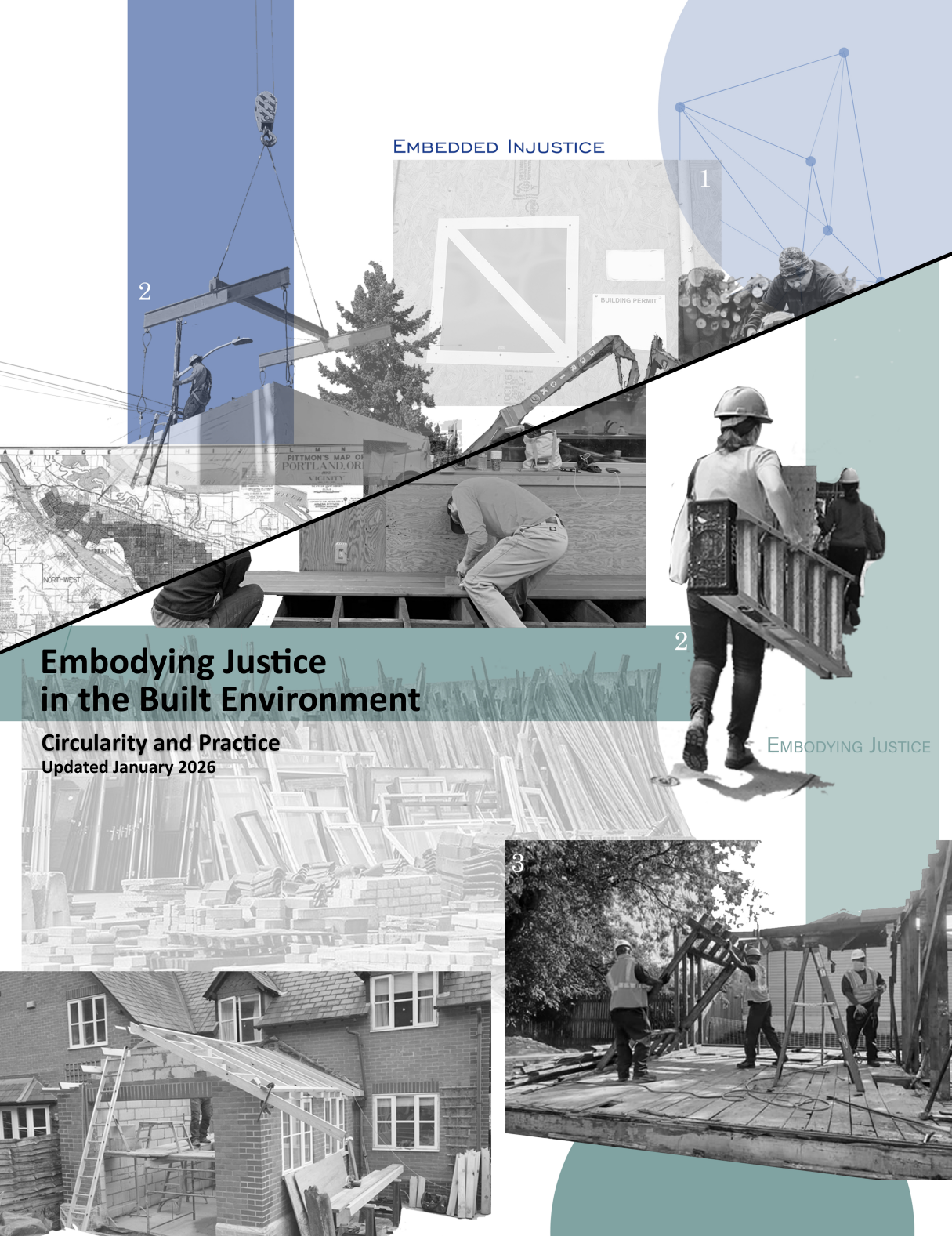
Circularity in Practice
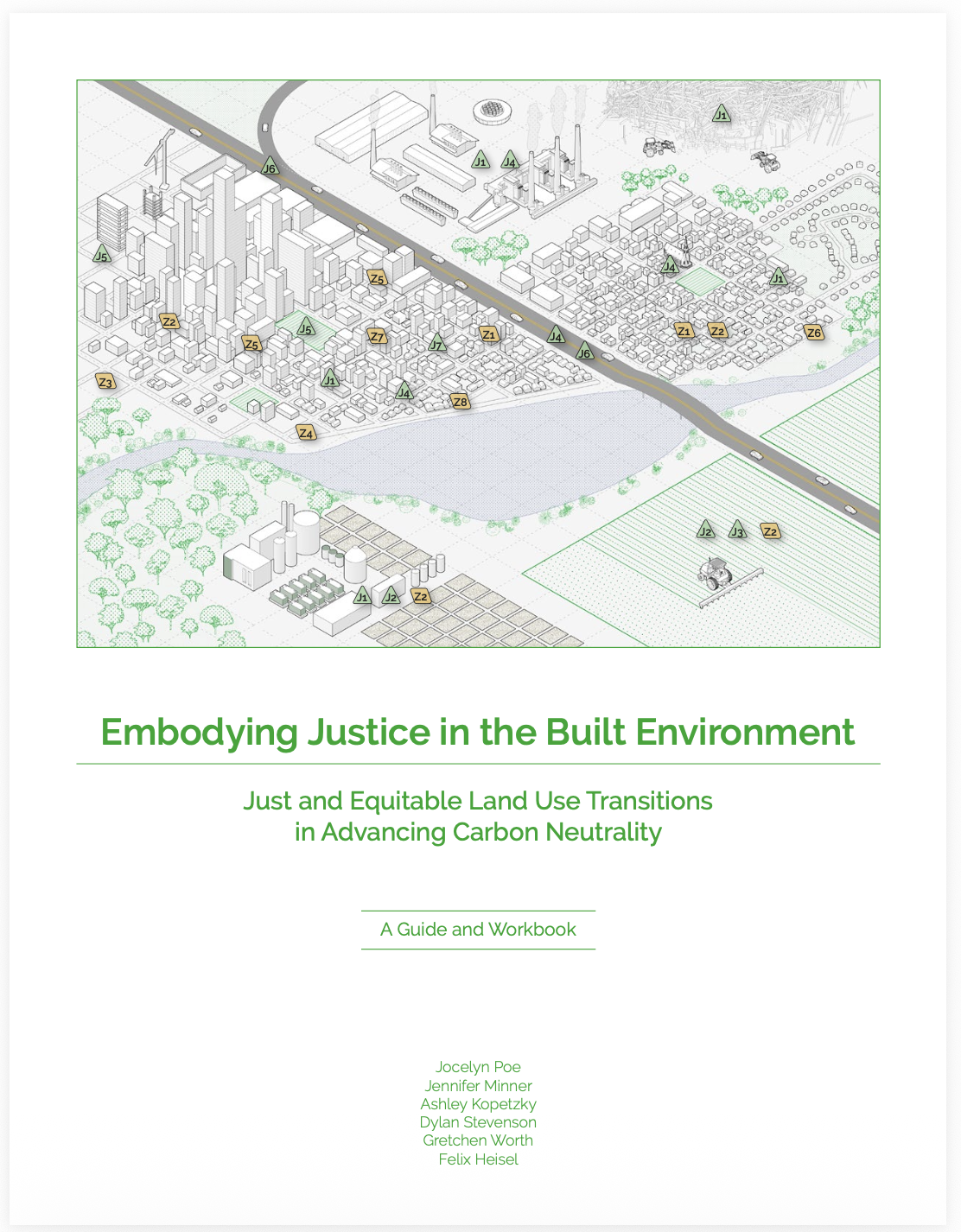
Just and Equitable Land Use Transitions In Advancing Carbon Neutrality



I had the distinct pleasure of presenting our work, Embodying Justice and Carbon in the Built Environment, in Türkiye at the Association of European Schools of Planning (AESOP) 2025 Congress. The talk, Embodying Justice in the Built Environment: Transatlantic Reflections on Carbon Neutrality, Circularity, and Justice, drew from two collaborative publications on Embodying Justice supported by the Carbon Neutral Cities Alliance. I discussed how planners, government agencies, and communities can meaningfully integrate justice and equity into their efforts to achieve carbon neutrality and reduce embodied carbon. I also shared case studies from our publications and reflected on transatlantic differences and shared challenges in advancing justice in the built environment, exploring how we might work toward a more equitable future. - Ash Kopetzky, Just Places Lab researcher