


Working to Preserve New York State
Economic Impacts and Workforce Development Training in the Preservation Trades
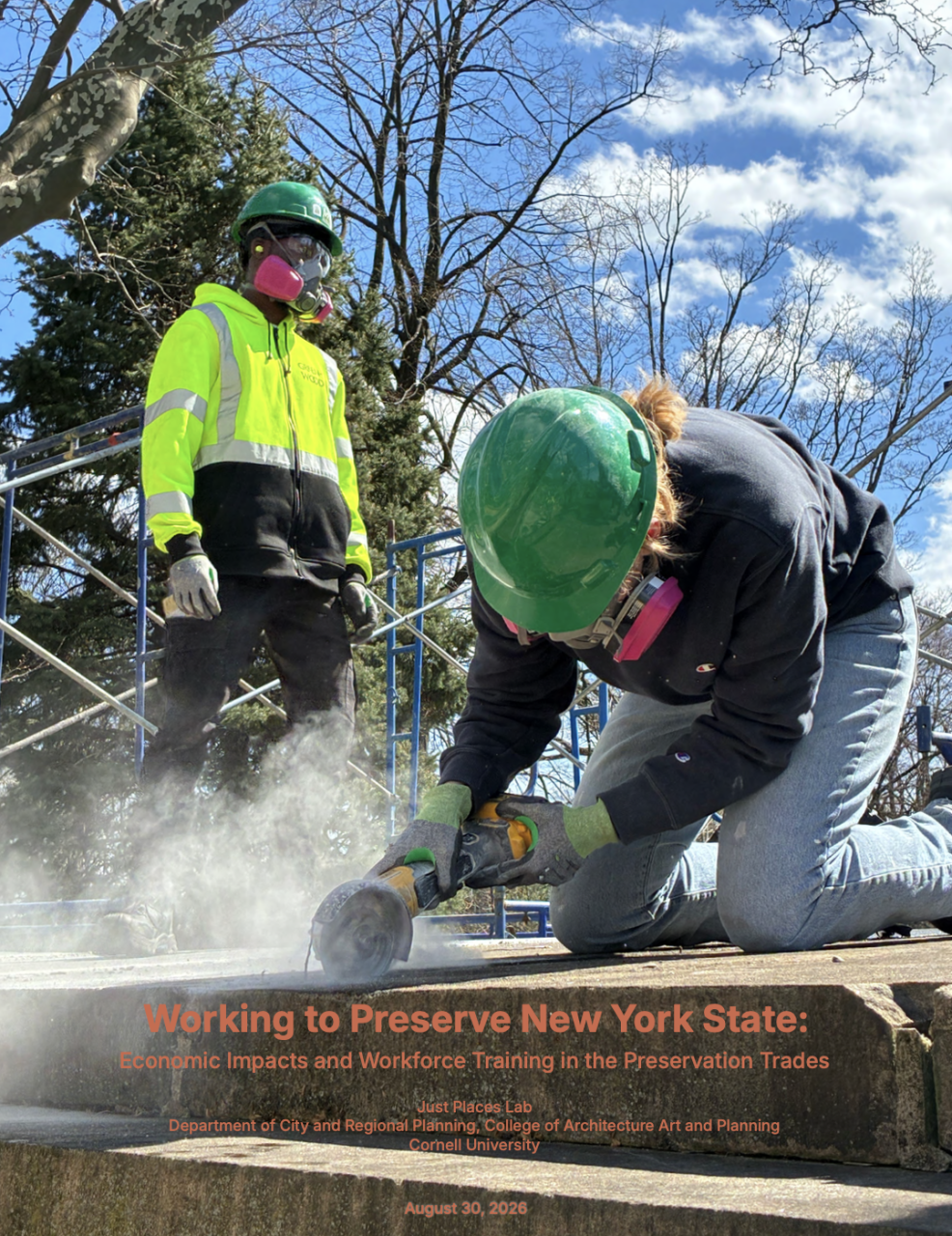
This report represents the first comprehensive analysis of the preservation trades in New York State. Preservation trades are specialized, skilled building trades focused on the maintenance, repair, conservation, rehabilitation, and restoration of historic buildings and sites. They are critical to the care of historic resources and older buildings and structures.
The preservation trades are essential to the future of New York State’s historic resources across its diverse urban and rural landscapes. The state has a large and aging building stock. For example, 65% of its 8.36 million housing units predate 1970. There is a great demand for the maintenance and repair sectors, but serious constraints on the supply of trained workers for these sectors. The complexity and needs for preservation is growing, but the workforce is not keeping pace. Without support for increasing skilled preservation trades workers, New York State’s historic resources are at risk.
To perform a comprehensive study of preservation trades in New York State, a mixed-methods research methodology was used that triangulates quantitative, spatial, and qualitative methods. The research plan included three components: 1) a statewide labor market and economic impact component, 2) an analysis of workforce training opportunities, 3) a Working to Preserve New York State symposium. The statewide labor market and economic impact analysis was conducted using spatial analysis of county business patterns and Input- Output analysis. The workforce training analysis entailed an inventory of preservation trades programs and interviews with a select number of program directors. The Working to Preserve New York State: Economic Impacts and Workforce Training in the Preservation Trades symposium was held on May 27, 2026, in Milstein Hall at Cornell University. The symposium convened over 40 stakeholders, including trades employers, instructors, and leadership of trades training programs, nonprofit groups, workforce development specialists, and funders.